
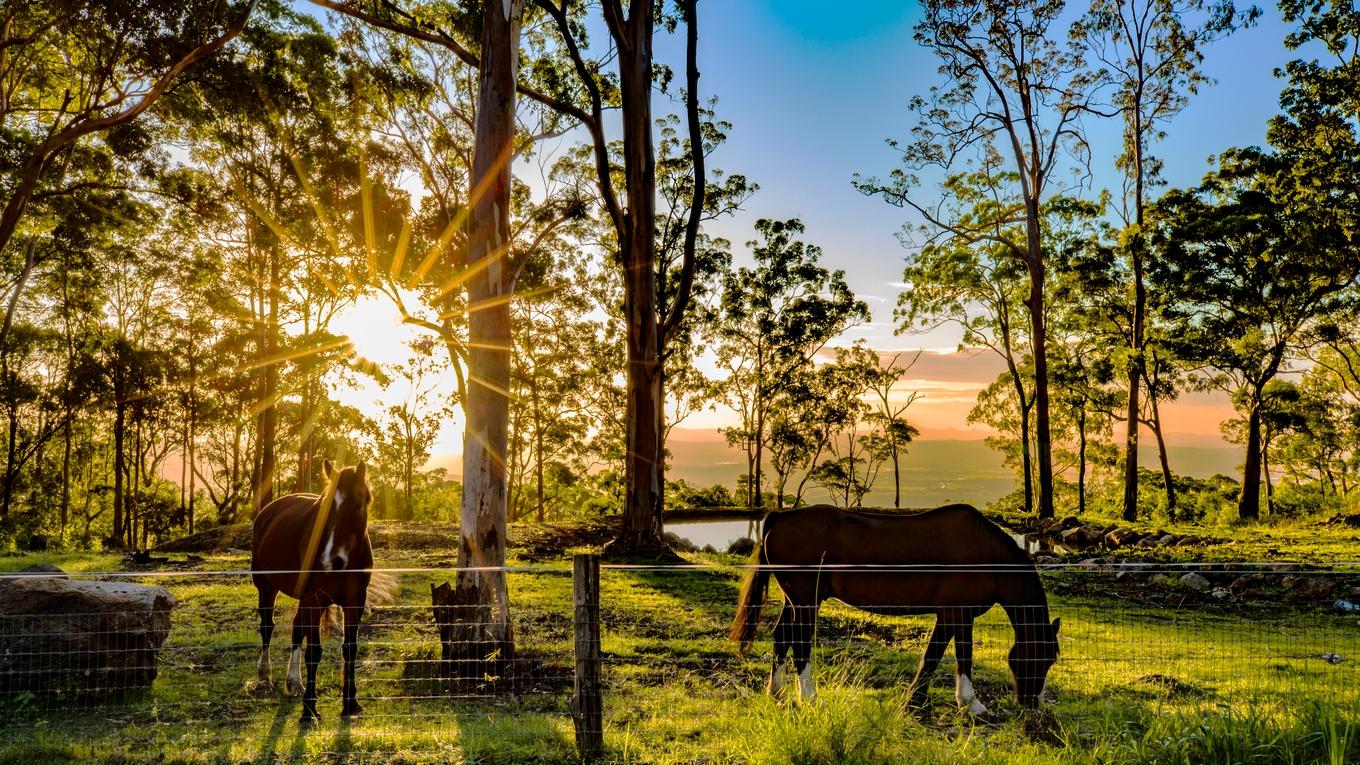
Trees can transform a horse property. They break up open paddocks, provide landscape character and may offer useful shade and shelter when positioned appropriately.
In Australia’s varied climate, managing exposure to heat, wind and heavy rain is an important part of horse care. Well-designed shelter, whether supplied by suitable trees or purpose-built structures, can help horses cope with local weather conditions. Horses must still have adequate space, water and options to move away from uncomfortable conditions.
Trees also contribute to the wider environment. Depending on the species and location, they can provide habitat for birds and insects, support biodiversity and help stabilise soil. Vegetated areas may also reduce erosion when planned and maintained well.
However, planting trees on horse properties takes more thought than simply choosing attractive varieties. Some species contain substances toxic to horses, and leaves, seeds or fallen branches can create risks. Trees should be selected after checking their suitability for equine environments, and potentially dangerous plants should be kept away from grazing animals.
Placement matters, too. Owners need to consider fencing, roots, drainage, maintenance, access to paddocks and the potential for branches to fall during storms.
Native plants can be valuable in a landscape plan when they suit the local climate and are safe for the intended setting. Consulting local horticultural experts and equine professionals can help owners make sound decisions.
For readers interested in gardens, horse farms offer a practical example of how thoughtful planting can combine visual appeal with land management.
The takeaway: Trees can enrich horse-country landscapes, but responsible selection and ongoing maintenance are essential to protect horses and the surrounding environment.